
Back to News
- News
- Career
Seven ways volunteering can support your career
Published
Many internationals start volunteering to give back to their community, but often don't expect how much they can gain in return. We spoke to volunteers across South Holland about their experiences, and to experts on how volunteering can help you build skills and support your career goals.
Image
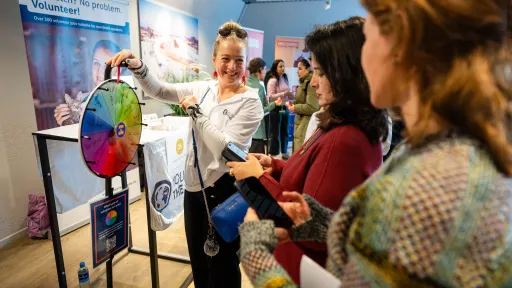
For many internationals, volunteering starts as a way to give back. But as the volunteers and experts we spoke to all agreed, it can also be a great way to build experience, grow your network, practise Dutch and feel more connected to your new community.
Drawing on these insights, we bring to you seven tips on how volunteering can support your career journey in the Netherlands.
1. Choose volunteering that builds relevant skills
Volunteering can be a valuable way to explore a profession, test a new direction or gain experience in a field you want to enter.
That's why Sarah Feid, Account Manager at The Hague International Centre, encourages internationals to approach volunteering strategically.
"Think about the career you want and find a volunteer position in an organisation related to that field. It allows you to test a new role and see whether it aligns with what you're good at."
Whether you're interested in communications, fundraising, research, teaching or event management, volunteering allows you to develop transferable skills while gaining practical experience.
When describing volunteer work on your CV, list the responsibilities you took on and the results.
Sarah also advises people not to become too fixated on titles:
"Focus on the work, not the job title. Read the role carefully and focus on the skills and responsibilities that interest you."
The skills you develop can strengthen your profile, but volunteering often creates another advantage: meaningful connections.
2. Let volunteering re-energise your career goals
Job searching in a new country can be draining. Sometimes volunteering helps you discover a new direction, but just as importanly it can remind you why you chose your profession in the first place.
Maria Alexandra Davila Contreras, originally from Ecuador, experienced this after joining Female Ventures in Rotterdam, a non-profit dedicated to advancing female leadership, as a marketing volunteer.
"It didn't change what I wanted. It reinforced it. It gave me back enthusiasm."
Using her expertise in brand management to contribute to meaningful projects while meeting other inspiring women helped her regain energy and motivation for her future search.
"You realise you're not alone."
When volunteering aligns with your interests and values, it can become much more than a line on your CV. It can help you stay connected to what excites and inspires you.
3. Don't overlook leadership opportunities
Volunteering is about much more than helping out.
Many smaller organisations need volunteers with skills in communications, fundraising, project management, governance and community engagement. Some are actively seeking board and committee members, while organisations like PEP Den Haag offer training for these roles.
Lucie Herraiz Cunningham from Volunteer The Hague, a project of PEP Den Haag, encourages internationals to think broadly about the opportunities available.
"Volunteering can also include leadership roles, as there is a real shortage of people willing to do it."
If you want to take your career to the next level, these opportunities can provide valuable experience in management, strategy and decision-making.
4. Build meaningful relationships, not just a network
One of the biggest benefits of volunteering is the opportunity to meet people from different backgrounds, organisations and industries.
Lucie encourages volunteers to focus on relationships, not just contacts.
"The job market is competitive, so verbal referrals are important. Be intentional about creating long-term connections, including with your manager."
These relationships can lead to introductions, recommendations and opportunities that never appear on a job board.
Alberto Gonzalez Otero experienced this first-hand. Originally from Spain, he volunteered with The World in Your Classroom, where internationals visited Dutch schools to share stories about their home countries and cultures.
"I didn't start volunteering to find a new job. I started because I wanted to give something back and do something that mattered to me."
Years later, a connection from that experience helped open the door to higher education. Today, alongside running his own coaching and consultancy business, Alberto works as a lecturer in International Business at The Hague University of Applied Sciences.
"Volunteer for something you genuinely care about, not because you expect a job from it. When you do meaningful work, you grow, meet inspiring people, and opportunities often find you when you least expect them."
5. Learn how work and life function in the Netherlands
For many newcomers, understanding Dutch workplace culture is a big part of the settling in process.
Volunteering offers a practical way to gain local experience, learn how organisations operate and understand cultural norms that are rarely spelled out (beyond the famous Dutch directness!). It can also provide opportunities to practise Dutch in real-life situations.
Deborah Valentine, Executive Director of ACCESS, a non-profit supporting internationals and run by international volunteers, says:
"Get out of the house. Volunteer. Meet people. Get answers to your questions and get fulfilling interactions."
Beyond professional experience, volunteering helps people become part of their local community.
"You'll learn some of the cultural rules that aren't written down."
6. Use volunteering to build confidence and belonging
For internationals, whether accompanying partners, refugees or career changers, volunteering can provide structure, purpose and a sense of belonging during periods of uncertainty.
After moving from Syria to South Holland, Ghofran Dhay volunteered in an elderly care home while learning Dutch and rebuilding her life.
"The first period was the most difficult. I was really afraid that I wasn't going to make it."
The experience helped her improve her language skills, build confidence and settle into her new surroundings. Today, she has a successful career as a research technician in Leiden's biotech sector.
"Once I made it through those first months, I said: yes, I can do it."
Volunteering looks different for everyone. Some people enjoy community events and meeting lots of new people, while others prefer smaller, more structured roles.
As Deborah says:
"Not everyone can just speak to everyone. The key is finding a way to contribute that works for you."
7. Set boundaries and make volunteering sustainable
Finally, a good volunteer experience should support your development, not leave you exhausted.
Lucie notes that enthusiastic volunteers can sometimes take on too much responsibility. Setting clear expectations about your availability helps create a healthier experience for everyone involved.
Volunteering can take many forms, from weekly commitments to one-off projects, such as running the registration desk at a community event. Being honest about your goals, especially if you're also looking for work, helps ensure a positive experience.
As the Dutch saying goes: vrijwillig maar niet vrijblijvend - voluntary, but not without commitment.
Ready to get started?
- Register for the upcoming Mix & Match Volunteer Job Fair from Volunteer The Hague on Saturday 28 November.
-
Explore volunteering opportunities across The Hague, Rotterdam, Delft and Leiden through Work in South Holland's volunteering page below.
